

September 10, 2026 | Criminal Defense
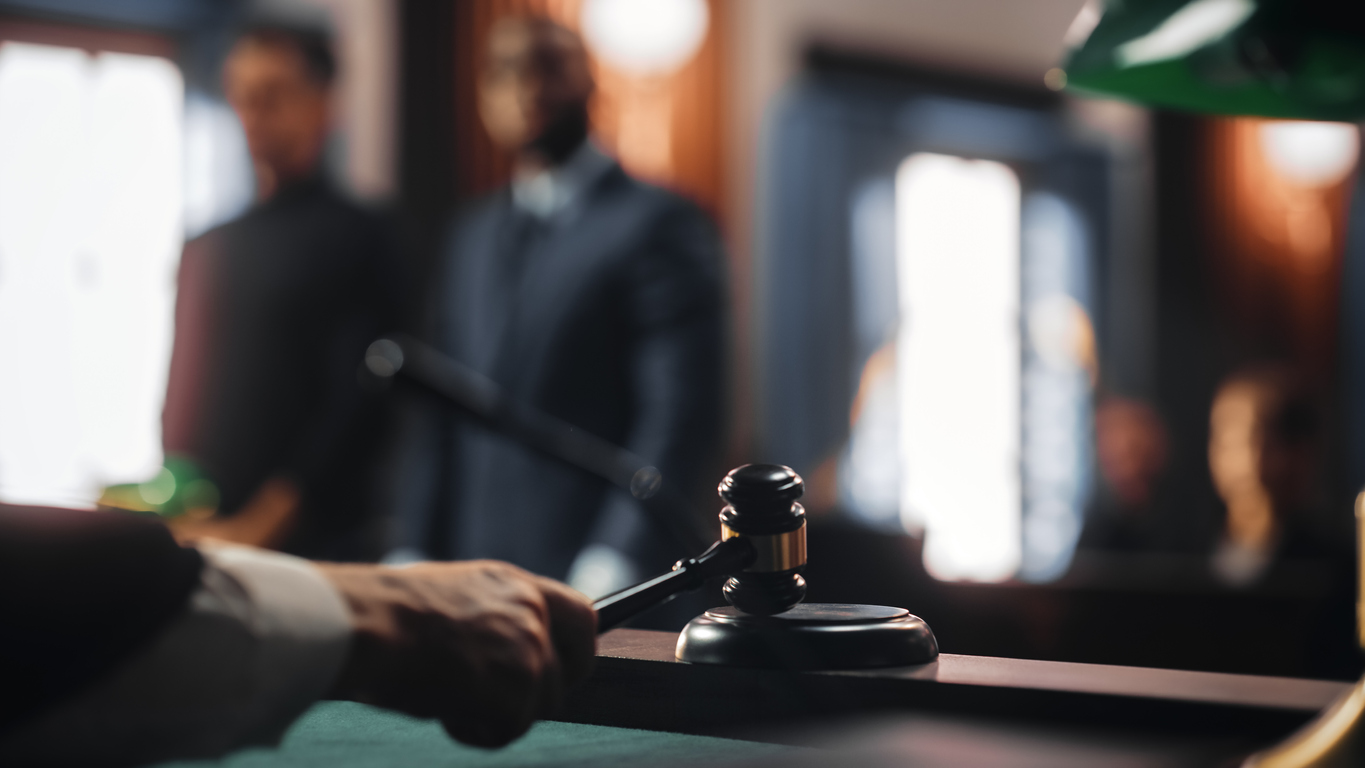
A criminal trial is the stage of a case in which prosecutors present evidence to prove the charges against the defendant beyond a reasonable doubt. In Los Angeles, California, many criminal cases are resolved before trial through dismissals, negotiated pleas, or other pretrial outcomes.
When a case does go before a judge or jury, it follows a fairly organized process.
What Happens Before a Criminal Trial?
Before a criminal trial begins, the case goes through arraignment and other pretrial proceedings. The defendant learns the charges at arraignment, is advised of certain constitutional rights, and enters a plea.
Felony cases generally also involve a preliminary hearing before trial. Pretrial proceedings can include discovery, motions, plea discussions, and, in felony matters, a preliminary hearing.
If the case is not dismissed or resolved with a plea deal, the parties begin preparing for trial.
How Is a Jury Selected in a Criminal Trial?
Jury selection, or voir dire, is the process of choosing jurors who can hear the evidence fairly and decide the case impartially.
In California criminal cases, the judge conducts an initial examination of prospective jurors, and attorneys are permitted to conduct supplemental questioning. Questions may explore whether a prospective juror has experiences, opinions, relationships, or biases that could affect their ability to evaluate the case fairly.
Before jury selection begins, the court and attorneys may address issues such as:
- The charges involved
- Expected witnesses
- Areas of questioning for potential jurors
- Challenges for cause
- The expected length of the trial
- The number of alternate jurors needed
California court rules specifically require a pre-voir dire conference covering these and other jury-selection issues. Once the required jurors and alternates are chosen, the case can move to the presentation of the parties’ positions and evidence.
What Happens During Opening Statements?
Opening statements give prosecutors and defense counsel an opportunity to tell jurors what they expect the evidence to show. They are not evidence themselves.
The prosecution typically gives its opening statement first because it has the burden of proving the charges. The defense may then explain what jurors should pay attention to, identify weaknesses it expects to expose, or provide context for evidence the prosecution plans to introduce.
An opening statement is essentially a roadmap. The actual case must still be established through admissible evidence and testimony.
What Happens After Opening Statements?
The prosecution presents its case first because the government carries the burden of proof. Prosecutors may call witnesses and introduce admissible physical, documentary, digital, or forensic evidence.
Defense counsel can cross-examine prosecution witnesses and challenge the meaning, reliability, or credibility of the evidence.
After the prosecution rests, the defense may present witnesses or evidence. However, defendants do not have to prove their innocence, and a defendant has a constitutional right not to testify.
What Happens During Closing Arguments?
Closing arguments allow both sides to explain what they believe the evidence establishes. Unlike witness testimony or exhibits, the attorneys’ arguments are not evidence.
The prosecution may argue that the evidence proves every required element of the charged offense. The defense may highlight inconsistencies, credibility problems, missing evidence, or other reasons the government has not satisfied its burden.
After the attorneys finish, the judge instructs the jury on the law it must apply. California uses standardized criminal jury instructions, commonly known as CALCRIM instructions, to address many of the legal rules jurors may need during deliberations.
How Does the Jury Reach a Verdict?
After receiving the judge’s instructions, jurors deliberate privately and determine whether the prosecution proved the charged offense beyond a reasonable doubt. A jury may return a verdict of guilty or not guilty, but the verdict must be unanimous.
If jurors cannot reach the required verdict after appropriate deliberations, the judge may declare a mistrial. Prosecutors may have the option of trying the case again.
If the jury returns a not-guilty verdict, the defendant is acquitted. A guilty verdict moves the case toward sentencing.
What Happens After a Guilty Verdict?
If the verdict is guilty, the judge determines the defendant’s sentence. The specific sentence depends on the charges, applicable California law, the circumstances of the offense, and other legally relevant factors.
A conviction also may not be the last step in the legal process. Depending on the circumstances, a defendant may have options for pursuing an appeal or other post-conviction relief.
Contact the Los Angeles Criminal Defense Lawyers at Perlman & Cohen Los Angeles Criminal Lawyers for a Free Consultation Today
Going to trial can put a person’s freedom, record, career, and future at stake. At Perlman & Cohen Los Angeles Criminal Lawyers, our attorneys have 40 years of combined experience handling criminal matters and can review the charges, evidence, and procedural issues involved.
For more information, contact the Los Angeles criminal defense attorneys at Perlman & Cohen Los Angeles Criminal Lawyers today to schedule a free, confidential consultation. We have a convenient location in Los Angeles, CA.
Perlman & Cohen Los Angeles Criminal Lawyers
355 S Grand Ave, Suite 2450, Los Angeles, CA 90071
(310) 557-1700
Available 24/7